Choosing between building a custom home and purchasing a spec home is one of the first big decisions many buyers face. Both options can be great choices—but they serve different lifestyles, timelines, and priorities. In Alberta especially, where climate, lot types, and long-term performance matter, the “right” option depends less on labels and more on fit.
This guide walks through the real differences between custom and spec homes so you can decide which path aligns best with how you live today—and how you plan to live years from now.
What Is a Custom Home?
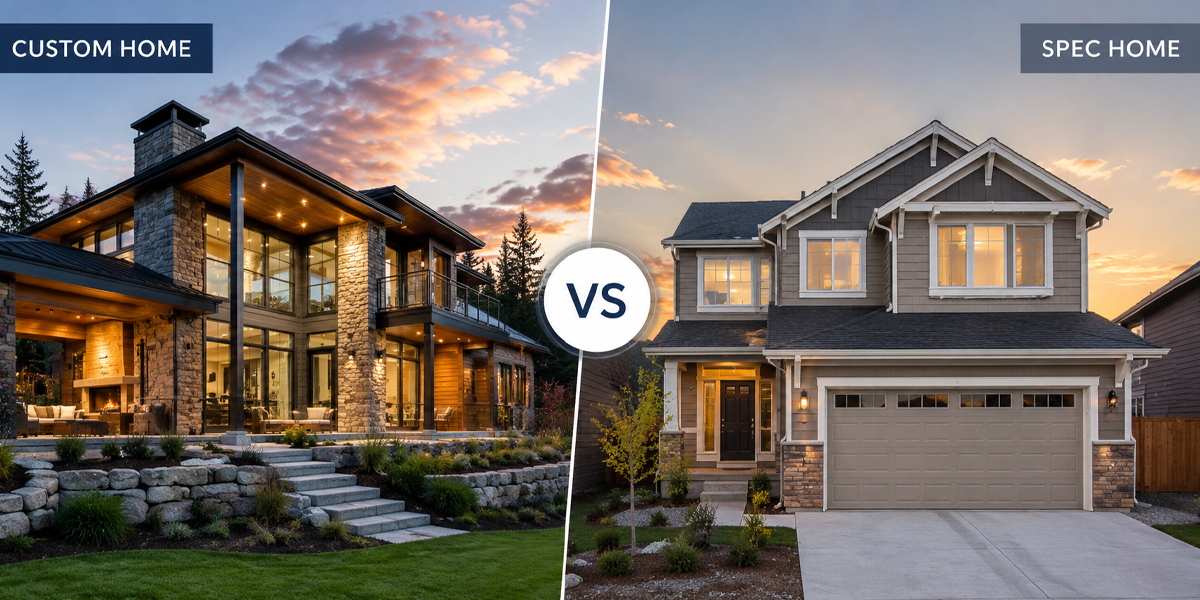
A custom home is designed specifically for you, your lot, and your lifestyle. From layout and orientation to materials and performance features, decisions are made intentionally rather than chosen from a pre-set package.
With a custom home, homeowners are typically involved throughout the process—working with a builder and design team to shape how the home functions, not just how it looks.
Alberta-specific note: Custom homes are often well-suited to Alberta’s wide range of lot types, including acreages and rural properties. Orientation for sunlight, snow management, wind exposure, and long heating seasons can all be addressed at the design stage rather than adapted later.
Builder insight: Custom doesn’t mean unlimited. Every project still works within real constraints—budget, zoning, lot conditions, and timelines. The advantage is choosing where flexibility matters most to you.
What Is a Spec Home?
A spec (speculative) home is built by a builder without a specific buyer in place. The design, layout, and finishes are selected ahead of time to appeal to a broad range of buyers.
Spec homes are often attractive because they offer a faster move-in timeline and fewer decisions. Many buyers appreciate being able to walk through a completed or near-complete home and know exactly what they’re getting.
Alberta-specific note: In many Alberta communities, spec homes are common in established subdivisions where lot sizes, setbacks, and architectural styles are already defined. This can streamline approvals and speed up timelines.
Builder insight: Spec homes are usually designed for general market appeal. While they can be well-built and thoughtfully finished, they’re rarely tailored to a specific family’s routines or long-term plans.
Key Differences Between Custom and Spec Homes
Design & Layout
Custom: Layouts are driven by how you live—daily routines, work-from-home needs, storage priorities, and future flexibility.
Spec: Layouts are designed to appeal to the widest audience possible, which may or may not align perfectly with your lifestyle.
Timeline
Custom: Typically longer. Time is needed for design, permitting, and construction.
Spec: Usually faster. Many are move-in ready or close to completion.
Budget Control
Custom: More choices mean more responsibility. Decisions influence cost, but you also control where to invest and where to simplify.
Spec: Fewer variables and more price certainty, but limited ability to reallocate budget toward what matters most to you.
Personal Involvement
Custom: Collaborative and decision-driven. Best for those comfortable being involved.
Spec: Simpler and more hands-off. Best for buyers who want fewer decisions.
Which Option Fits Your Lifestyle Better?
A Custom Home May Be a Better Fit If:
- You plan to stay long-term and want the home to evolve with you
- Layout, performance, and energy efficiency matter more than speed
- You’re building on an acreage or a unique lot
- You’re comfortable making decisions over time
A Spec Home May Be a Better Fit If:
- You need a quicker move-in timeline
- You prefer fewer decisions and less involvement
- You’re comfortable adapting to an existing layout
- You want clearer upfront pricing
Neither option is inherently “better.” The best choice is the one that supports how you want to live—not just this year, but years from now.
Long-Term Value Considerations
Value isn’t just about purchase price. It’s also about how well the home supports your life over time.
Custom homes often offer stronger long-term value for homeowners who plan to stay put. Designing for future needs—family changes, aging in place, or evolving work habits—can reduce the need for renovations later.
In Alberta’s climate, long-term performance matters. Decisions around insulation, windows, layout orientation, and mechanical systems can have a meaningful impact on comfort and operating costs over decades.
Common Misconceptions We See
- “Custom homes are always much more expensive.” Not always. Cost depends on size, complexity, and choices—not just the label.
- “Spec homes are lower quality.” Many are well-built, but they’re designed for general appeal rather than specific lifestyles.
- “Custom means stressful.” Stress often comes from unclear expectations, not customization itself.
- “Spec means zero flexibility.” Some spec homes allow limited changes, depending on timing.
How Builders Help Clients Decide
Good builders don’t push one option over the other—they help clients clarify priorities.
At Thomas Built Homes, conversations often start with questions like:
- How long do you plan to stay in the home?
- What daily routines should the home support?
- How involved do you want to be in decisions?
- What matters most: speed, flexibility, or long-term performance?
Understanding these answers makes it easier to choose the right path. For a deeper look at what happens once you decide to build custom, see our guide on understanding the custom home building process.
Final Thoughts
Custom homes and spec homes both serve an important role. The right choice depends on your timeline, your lifestyle, and how you define value.
If you’re still weighing your options, our complete guide to what to know before building a custom home in Alberta brings together the key decisions, costs, timelines, and planning considerations in one place.
FAQs
Is a custom home always more expensive than a spec home?
No. Cost depends on design complexity, materials, and site conditions. Some custom homes cost more, while others are comparable depending on choices.
Can I make changes to a spec home?
Sometimes. It depends on how far along construction is and the builder’s policies. Options are usually limited compared to a full custom build.
How long does a custom home take compared to a spec home?
Custom homes typically take longer due to design and permitting. Spec homes often allow faster move-in timelines.
Which option is better for long-term living?
For homeowners planning to stay long-term, custom homes often provide better lifestyle fit and adaptability. Spec homes can be ideal for shorter timelines or simpler needs.